
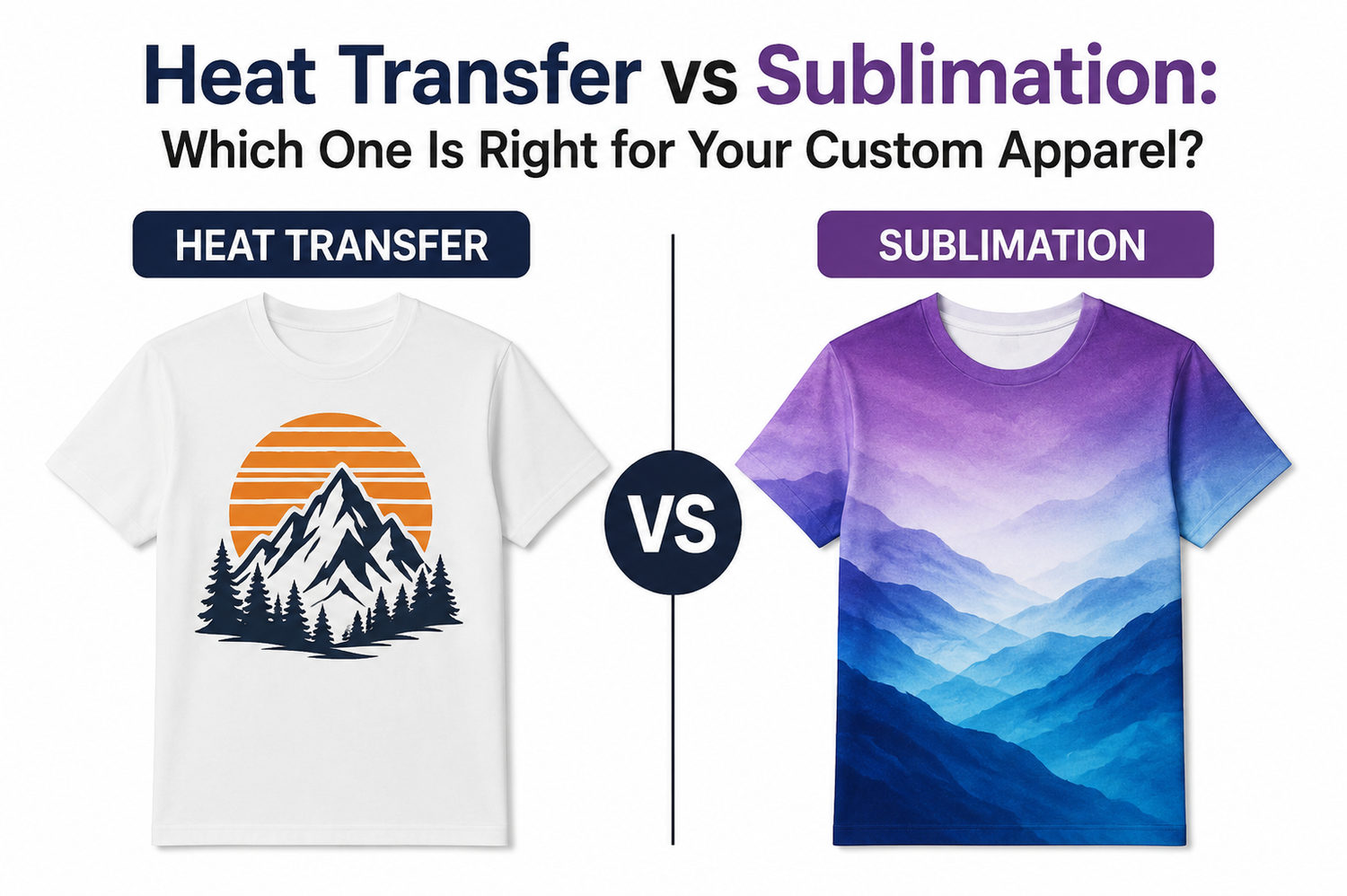
If you're getting into custom apparel printing, you've probably come across two terms that get thrown around a lot: heat transfer and sublimation. Both use heat to apply designs onto fabric - but that's pretty much where the similarities end.
Choosing the wrong method for your garments can mean wasted blanks, faded prints, and frustrated customers. This guide breaks down everything you need to know so you can make the right call every time.
What Is Heat Transfer Printing?
"Heat transfer" is actually a broad category that covers several printing methods but in today's custom apparel world, the most popular and versatile type is DTF (Direct-to-Film) transfer printing.
Here's how it works:
- Your design is printed onto a special PET film using CMYK + white DTF inks
- Hot-melt adhesive powder is applied to the wet ink
- The film is cured (dried) in a heat tunnel
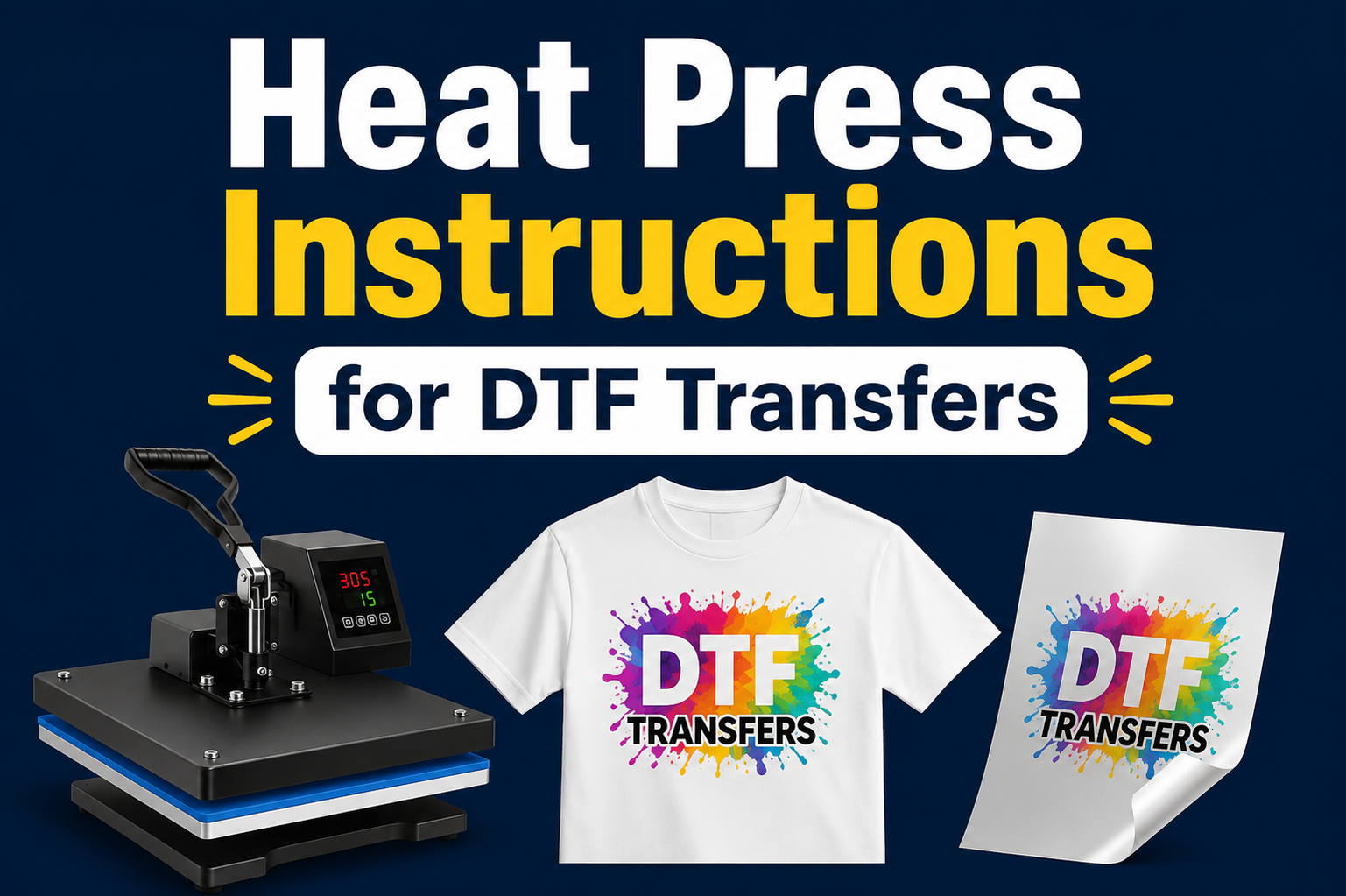
- The finished transfer is pressed onto your garment using a heat press at 280–300°F
- The film is peeled away, leaving a vibrant, full-color design behind
The key word here is adhesive. DTF transfers bond to the surface of the fabric through a layer of adhesive which means they can stick to almost any type of fabric, regardless of fibre content.
What Is Sublimation Printing?
Sublimation is a completely different process. Instead of bonding on top of the fabric, sublimation ink actually becomes part of the fabric at a molecular level.
Here's the basic process:
- Your design is printed onto special sublimation paper using sublimation inks
- The paper is placed on the garment and pressed at a higher temperature (380–400°F)
- The heat converts the ink from a solid directly into a gas (that's the "sublimation" part)
- The gas penetrates the polyester fibers and permanently bonds with them
- When cooled, the ink solidifies inside the fibres completely embedded
The result is a print that won't crack, peel, or fade because technically, the ink is part of the fabric itself.
The Big Difference: Fabric Compatibility
This is the most important factor when choosing between DTF and sublimation.
| Fabric Type | DTF Transfer | Sublimation |
|---|---|---|
| 100% Cotton | Works great | Won't work |
| 100% Polyester | Works great | Works great |
| Cotton-Poly Blends | Works great | Faded, washed-out look |
| Tri-Blend (Cotton/Poly/Rayon) | Works great | Poor results |
| Nylon | Works | Depends on coating |
| Dark-colored fabrics | Works (white ink base) | Won't work |
| Light-colored fabrics | Works great | Works great |
The bottom line: Sublimation only works well on 100% polyester, light-colored garments. DTF works on virtually everything.
This is a huge deal if you're running a custom apparel business. Most of your customers will want to print on cotton or blended tees the soft, comfortable everyday shirts that everyone loves. With sublimation, those orders simply aren't possible.
Color and Print Quality: How Do They Compare?
Both methods can produce stunning, full-color results — but they look and feel different.
Sublimation Color
Because the ink becomes part of the fabric, sublimation produces incredibly vibrant colors with a smooth, almost photographic quality. There's no texture to the print at all it feels like the fabric itself. Colors are especially vivid on white or very light garments.
DTF Transfer Color
DTF transfers also produce vibrant, full-color results including on dark fabrics, thanks to the white ink base layer. The finish has a very slight texture (you can feel a thin, flexible layer on the surface), but modern DTF transfers are incredibly thin and soft. Most people can barely tell the difference.
For most designs logos, graphics, text, photography-based artwork DTF and sublimation are visually comparable. The real differences show up in what fabrics you can use and what colors you can print on.
Durability: Which One Lasts Longer?
Both methods are durable when done correctly but in different ways.
Sublimation wins on longevity when used on the right fabric. Because the ink is inside the fibers, it can't crack, peel, or flake. However, sublimation prints can fade over time, especially with frequent washing and sun exposure.
DTF transfers are extremely durable on any fabric. High-quality DTF prints (like those from Perfect DTF Transfers) hold up for 50+ washes without cracking or peeling when properly cared for. The print does sit on top of the fabric surface, so the longevity depends on the quality of the transfer and the pressing application.
Verdict: Well-made DTF transfers on properly cared-for garments are comparable in durability to sublimation and DTF works on far more garment types.
Which Method Should You Choose?
Here's a simple way to decide:
Choose DTF transfers if:
- You're printing on cotton, blended fabrics, or a mix of garment types
- You need to print on dark-colored garments
- You want no minimums and fast turnaround
- You don't want to invest in expensive printing equipment
- You need vibrant, full-color results on anything from t-shirts to hoodies to hats
Choose sublimation if:
- You're printing exclusively on 100% white or light polyester garments
- You want all-over printing (full garment coverage)
- You have the budget for sublimation equipment
- You're doing sportswear, swimwear, or performance apparel
The truth? Most custom apparel businesses use DTF as their primary printing method because of its flexibility. Sublimation is a great complement when you're specifically working with polyester performance wear.
Why Perfect DTF Transfers Is the Smart Choice
At Perfect DTF Transfers, we handle all the complex printing so you don't have to. Our gang sheets and custom transfers are printed in our Broussard, Louisiana shop using premium DTF equipment giving you professional results without the equipment investment.
- No minimums
- Same-day local pickup in Broussard & Lafayette
- Next-day shipping anywhere in the U.S.
- Works on cotton, polyester, blends, hoodies, hats, and more
- Family-owned and operated since 2002
Order your custom DTF transfers at perfectdtftransfers.com


Leave a comment
This site is protected by hCaptcha and the hCaptcha Privacy Policy and Terms of Service apply.